
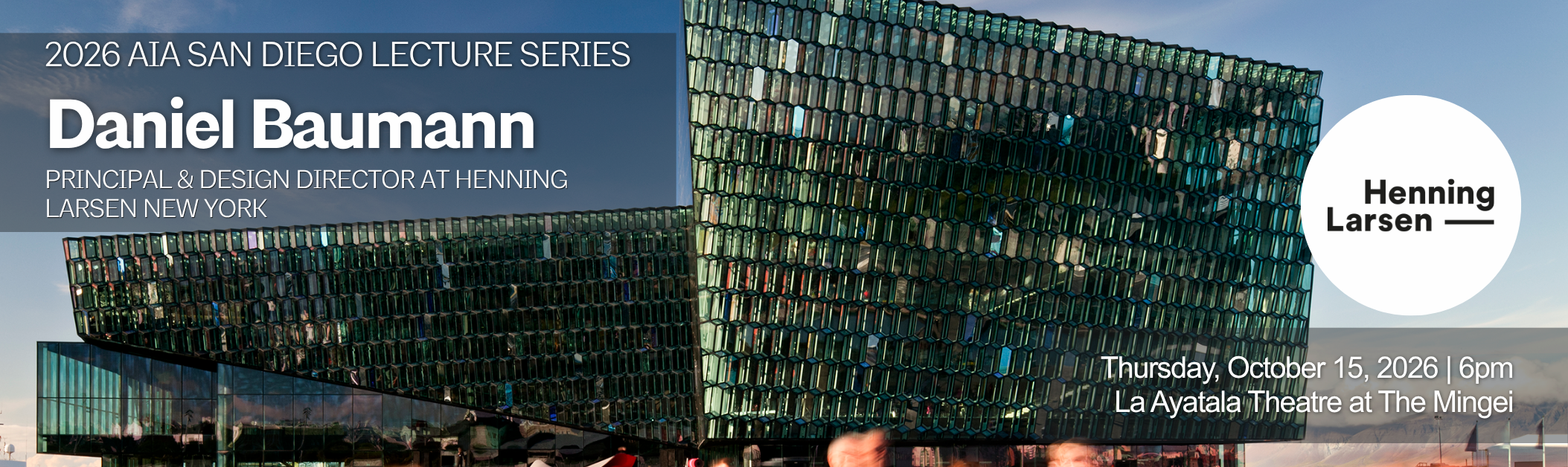
In October, we welcomed Daniel Baumann of Henning Larsen for a thought-provoking lecture on architecture's capacity to create meaningful impact through curiosity, collaboration, and sustainability.
Centered around the concept "Form follows curiosity,” Baumann challenged us to think beyond architecture as an exercise in form-making and instead consider how spaces can invite participation, accessibility, and belonging. Great places, he argued, should be attractive and welcoming to everyone.
Throughout the lecture, Baumann emphasized the importance of embracing the collective nature of architecture. No project is the work of a single individual, and today's most pressing challenges require diverse perspectives working together. He encouraged students and practitioners alike to "own the fact that we're nerds," highlighting how architects' curiosity and fascination with the world can become powerful tools for addressing complex environmental and social issues.
A recurring theme was the need to remove barriers to sustainability. Baumann shared examples of projects that seek to leave sites better than they were found, prioritizing biodiversity, circularity, and long-term environmental stewardship. From ambitious low-carbon developments to projects that restore ecological value despite significant construction, he argued that sustainability should no longer be treated as experimental, but as an expected standard of practice.
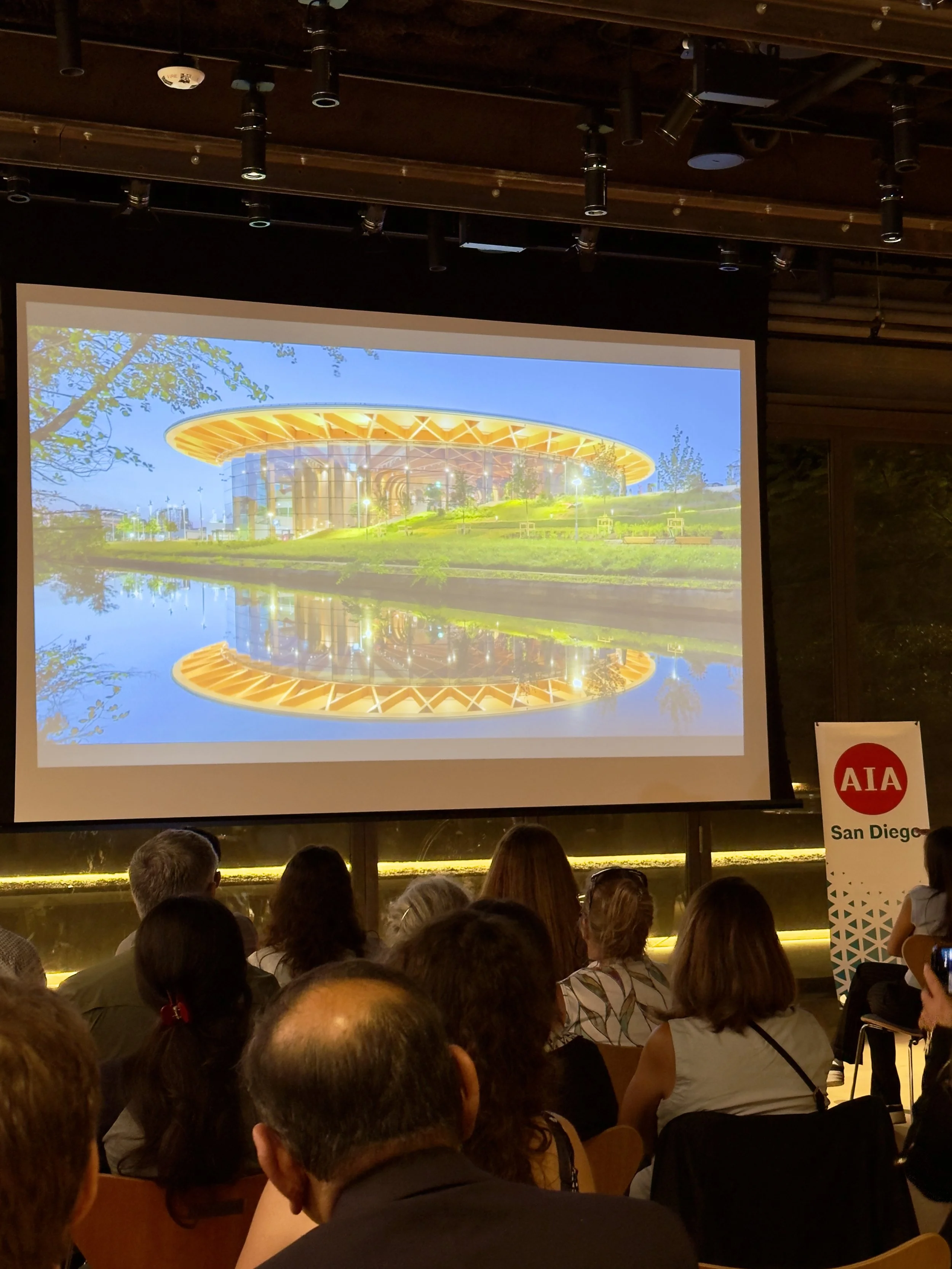
One highlighted project, World of Volvo, demonstrated how beauty and environmental performance can work hand in hand. Baumann described this approach as pursuing "beauty by impact," where design quality emerges from a project's contribution to people and planet rather than from aesthetics alone.
Drawing inspiration from the Scandinavian concept of Allemansratten, the right to roam, he also reflected on humanity's relationship with nature and the importance of creating environments that foster connection rather than separation. Through discussions of landscapes, trees, rock formations, and public access, he illustrated how architecture can strengthen our understanding of and engagement with the natural world.
Baumann concluded by reinforcing the importance of collaboration, encouraging us to embrace differing perspectives and recognize that the challenges of the future will be solved through collective effort rather than individual expertise. Reflecting on the increasing complexity of contemporary challenges, he closed with a powerful reminder: “In a time of polarities, design cannot simply choose one side. It has to create meaningful space between opposite.” For Baumann, architecture's greatest potential lies not in choosing sides, but in bringing people, perspectives, and ideas together to create more thoughtful and sustainable futures.